
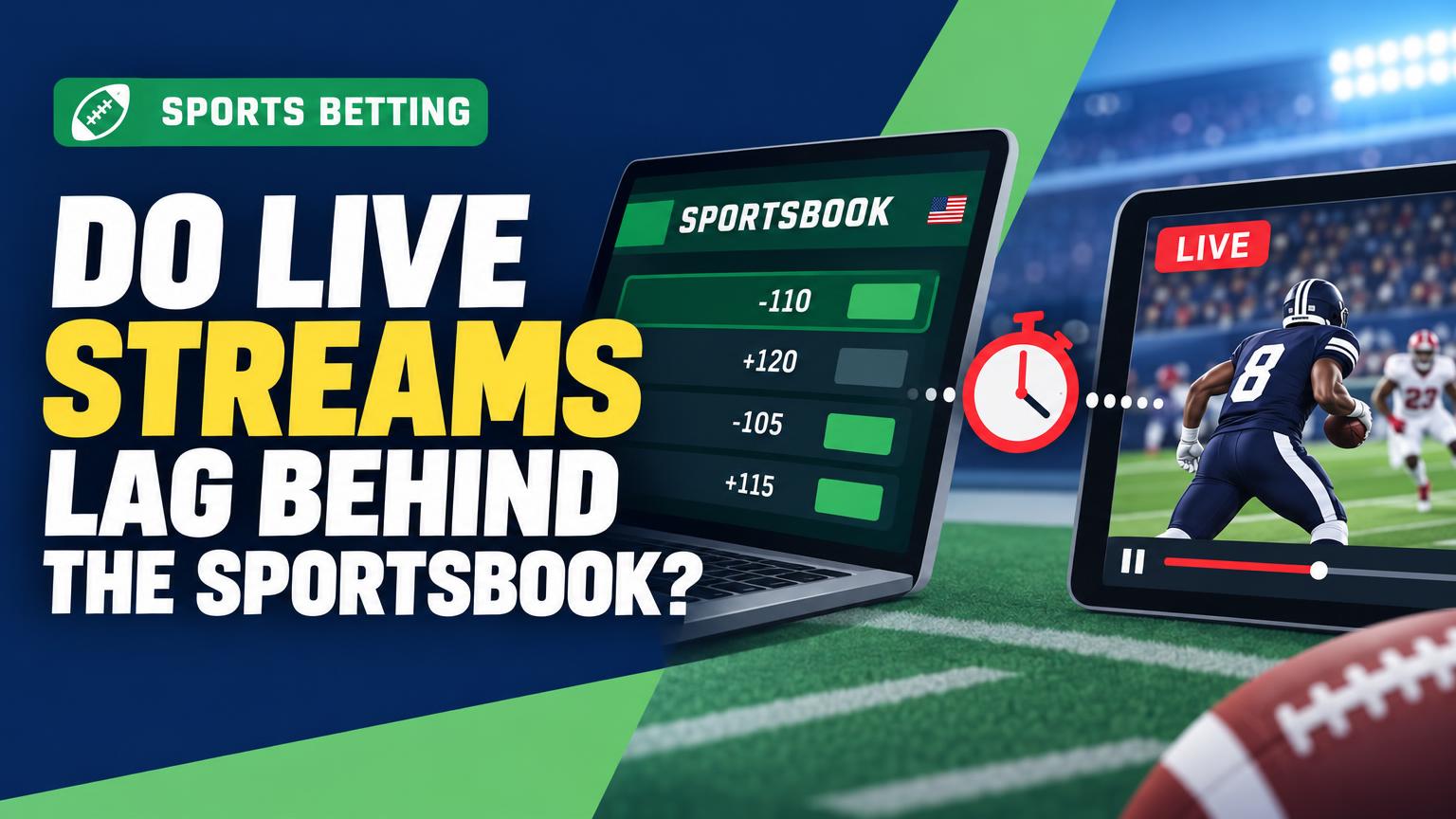
A live picture is not necessarily a live clock.
A forward breaks into the penalty area on the sportsbook stream. Before the shot appears, the goal market is suspended. It feels as though the sportsbook knows what happens next—but the video may be arriving several seconds after the action on the field. The sportsbook can receive match data through a separate, faster feed and pause a market when a scoring chance develops.
An odds figure on screen is not necessarily an available wager, either. Prices can change while a selection is being submitted, and a bet is only placed if the sportsbook accepts it. The apparent contradiction often comes from comparing two different timelines: when the event happened and when its video reached the viewer.
What “live” actually means
A live stream shows an event while it is happening, but it still takes time to reach a screen. A camera captures the action, the video is processed and sent over a network, and the player buffers enough footage to keep it running smoothly. That makes “live” different from instantaneous.
The picture, the price, and the bet slip follow separate paths:
- Video delivery: The stream shows a moment from the event, often a few seconds after it happened.
- Odds updates: The sportsbook may change a price using information that reaches its trading system before the same moment appears on the stream.
- Bet acceptance: A submitted wager may be checked against the latest market state before the sportsbook confirms it. The price visible when the button is pressed may not be the price offered at confirmation.
These processes can each be current by their own clock. A stream can be showing recent action while the displayed odds reflect newer information, and neither display alone establishes that a bet has been accepted.
How odds can move before the picture
A live event does not reach the odds board and video player as one synchronized signal. At the venue, a data collector or tracking system records events such as a point ending, a foul, or a goal. That information can pass through a data provider to the sportsbook’s trading systems, where models and traders may change prices or pause a market. The updated odds then travel to the app or website.
The pictures take a different route. Cameras feed a production team, which selects shots and adds graphics before the video is encoded and distributed. The player may also buffer footage to keep it from stuttering. A stream inside a sportsbook can follow a different delivery route from a television broadcast of the same match.
That separation can produce a familiar sight: a tennis market disappears while the streamed point still appears to be in progress. A courtside report may have reached the trading system while the player is showing buffered footage. But a suspension does not prove the point has already ended. Some markets pause at predictable moments, such as before a serve, or when the sportsbook cannot rely on its incoming data.
There is no fixed gap between the two paths. Venue connectivity, production choices, network conditions, and the viewer’s device can all affect timing. On one stream, the odds and picture may seem nearly aligned; on another, the odds may move noticeably earlier.
A three-pointer, seen out of order
Imagine a basketball player taking a late three-pointer. On one screen, the broadcast shows the shot going in, then the sportsbook pauses the next-score market, then posts a new price. That sequence feels straightforward: the picture appears to lead the market.
A viewer watching the same play through a more heavily buffered stream might see a different order. The market pauses while the player is still dribbling on screen. A new price appears, and only then does the video show the shot. The sportsbook may have received game data ahead of that viewer’s picture; the screen alone cannot show exactly when it received the information.
A third display could show the shot, then the new price, with no visible pause between them. A brief suspension may have happened between screen refreshes, or that market may not have been available to the viewer at that moment. Likewise, a price visible during the shot does not establish that a wager at that price would be accepted; how odds can change before a bet is accepted depends on more than what the screen displays.
A changed price is evidence of a market response, not a stopwatch. It cannot date a video frame or, by itself, reveal the stream’s delay in seconds.
Why the gap keeps changing
Video timing can change within one game. Camera cuts, replays and graphics add production time; encoding then compresses and packages the footage for delivery. A service may also hold extra video in a buffer to prevent stalls, at the cost of showing the action later.
Network conditions can move that delay again. A connection hiccup may force the player to buffer, and switching between Wi-Fi and mobile data can do the same. A busy or older device may take longer to decode footage. Two viewers using the same stream might therefore see one play at different times.
Odds travel on a separate timetable. A venue update may reach a data provider promptly or arrive late; sportsbook systems may then pause the market, check the report and recalculate prices. If the betting app refreshes its display periodically, the number on screen can briefly trail a change in the underlying market.
The gap is movable, not a single stream-delay figure. A buffering pause can push video farther behind prices, while a player that skips ahead when it resumes may close some distance. A slow data update or app refresh can briefly make the picture look ahead instead.
The bet slip is not a confirmation
An odds button shows a currently displayed price, not a reserved one. Tapping it usually adds a selection to the bet slip, where the stake can be entered. Even after the selection is submitted, the wager may still be pending. These are separate steps in how live bets are placed and accepted.
While a submission is pending, the sportsbook may check whether the market remains open and whether the requested price is still available. If play changes during that check, the market might be suspended, or the price might change. Depending on the sportsbook’s settings and the bettor’s preferences, a changed price may require approval, be accepted under a selected preference, or cause the request to be declined.
For example, a selection might show 2.10 when it is added to the slip, then show 1.85 when the request is processed. The important question is not which number appeared first, but what the confirmation says. An accepted-bet record normally identifies the wager and its accepted odds; a pending indicator or an error message does not.
This brief processing interval can feel like another kind of stream lag, especially when the video shows action at the same time. It is better understood as a wager-status check. The stream may be ahead or behind the app display, but neither picture establishes that a submitted selection became an accepted wager.
How to estimate the stream delay
- Choose an event that is easy to spot
A goal, basket, or point ending a rally is easier to match than a subtle change in play. Keep the same sportsbook stream open throughout the check.
- Use a separate event update
Compare the footage with a score feed or another source that reports the event independently of the sportsbook stream. That source may have its own reporting delay, so its update is a reference point—not the exact moment the event happened.
- Time the two appearances
Start a stopwatch when the update appears and stop it when the event appears in the video. A stopwatch on one device avoids relying on two device clocks that may not agree; if the video appears first, record that order rather than forcing a positive delay.
- Repeat across several moments
Note the gap for several distinct events. Record any pause, loading spinner, quality change, or switch away from the app, since each can alter buffering and make a comparison less useful.
- Read the pattern cautiously
A consistent gap gives a rough sense of how that session’s stream compared with that update source. Changing gaps are worth noting too, but neither pattern establishes the stream’s delay from the action at the venue. The same approach can help check whether sportsbook live streams are current without treating an odds change as a stopwatch.
A fresh session, device, connection, or event may produce a different result.
The stopwatch measures the time between two appearances of an event, not the event’s true time. A delayed score feed can make the stream seem closer to real time—or even appear to lead it. Pauses and buffering can also change the gap mid-session.
Stream notices and betting countdowns
Do sportsbooks show how far their streams are behind?
Some display a delay notice near the video player, while others give no timing figure. A notice may describe an estimated gap between the feed and live action; it does not show whether the video matches the odds on screen. Details may vary between sportsbooks that display live betting delays.
What does the countdown on a live bet measure?
It usually marks a waiting period while a wager request is processed, giving the sportsbook time to check for changes in play or price. It is not a measurement of how far the stream trails the event, and the wager may still be repriced or declined.
Does a faster internet connection eliminate the lag?
A stable connection may reduce buffering on the viewer’s device. It cannot remove delays already built into video production and distribution, so footage may still trail the information used to update odds.
Can a delay notice be used to time a bet?
Not reliably. Even when a notice gives a number, it may be an estimate for the video feed rather than a live comparison with prices or bet acceptance.
A market can pause before the streamed play appears without anything being out of order at the sportsbook. The video, the odds and the wager each have their own timing: the picture arrives through the stream, prices may respond to a separate game-data feed, and a bet exists only once acceptance is confirmed. If the sequence looks puzzling, a buffering indicator or playback jump may help explain the picture. The accepted-bet confirmation establishes what happened to the wager. Neither a frame on screen nor a price in the bet slip proves they were current at the same moment.