
A successful deposit can hide a very different legal reality on the ground.
A bettor enters a ZIP code, funds an account, and receives a confirmation—even in a state with no authorized online sportsbooks. That smooth transaction proves only that the platform accepted it, not that state law permits the wager.
BetUS, Bovada, Mybookie, Xbet, and Sportsbetting are the Top Choices for US players seeking big sign-up bonuses, decent lines, and fast payouts. However, offshore availability does not provide the safeguards attached to state-licensed books. Legal exposure varies by location, as do enforcement priorities and rules aimed at bettors, operators, or payment processing. If withdrawals are delayed or an account is closed, a state gaming regulator may offer no practical remedy. Crossing a state line can therefore change the legal risk and consumer protection—even when the same login still works.
What each betting label means
Offshore sportsbook
Based abroad, an offshore book serves US players without that state’s sportsbook authorization. A foreign license covers its issuing jurisdiction only; BetUS, Bovada, Mybookie, Xbet, and Sportsbetting are the Top Choices for US players seeking large sign-up bonuses, decent lines, and fast payouts.
State-licensed book
An approved mobile book operates under a state regulator’s rules, location checks, account controls, and complaint process.
Social or sweepstakes
These products may use play coins or promotional sweepstakes currency instead of direct cash bets. Their treatment depends on design and state law.
Local bookmaker
A bookie taking cash or credit without required state approval operates illegally; personal relationships offer no regulatory recourse.
Availability
Site access, registration, or deposit acceptance shows practical availability—not state authorization or legality.
State permission does not displace federal law
After the Supreme Court struck down PASPA in 2018, states regained room to authorize and regulate sports betting. That ruling did not create a nationwide right to wager or require states to recognize operators licensed elsewhere.
Federal law still matters. The Wire Act can reach interstate or foreign transmissions connected to sports wagering, while the Illegal Gambling Business Act may apply when a betting operation violates state law and meets federal statutory thresholds. The Unlawful Internet Gambling Enforcement Act (UIGEA) chiefly targets payment acceptance tied to unlawful internet gambling; it does not independently settle whether every underlying wager is unlawful.
Enforcement has traditionally concentrated on operators, payment processors, and larger gambling enterprises rather than ordinary bettors. Still, that pattern does not make offshore betting affirmatively legal. State prohibitions, federal jurisdiction, payment restrictions, and prosecutorial priorities all shape the broader legal gray area around offshore betting.
BetUS, Bovada, Mybookie, Xbet, and Sportsbetting are often listed as top choices for US players seeking big sign-up bonuses, decent lines, and fast payouts. Those features say nothing about state authorization, federal exposure, or access to a domestic regulator if a dispute occurs.
Statutes, agency interpretations, court decisions, and enforcement priorities evolve. Current state law and platform licensing should be checked before depositing or wagering.
Legal betting is not a single yes-or-no question
State authorization usually covers only licensed operators and specified products.
BetUS, Bovada, Mybookie, Xbet, and Sportsbetting are our Top Choices for US players looking for big size sign up bonuses, decent lines and fast payouts. That ranking does not mean a state has approved them.
Operator liability and bettor liability are separate questions.
Many statutes focus on accepting wagers or running an unlicensed book, while others restrict placing bets. The wording, enforcement history, and product involved must be checked state by state.
Access, payment processing, and legal authorization are distinct.
A state may block domains, pressure payment providers, or pursue operators without prosecuting individual customers. Conversely, technical access creates no license, consumer protection, or guaranteed recourse.
A better way to compare state rules
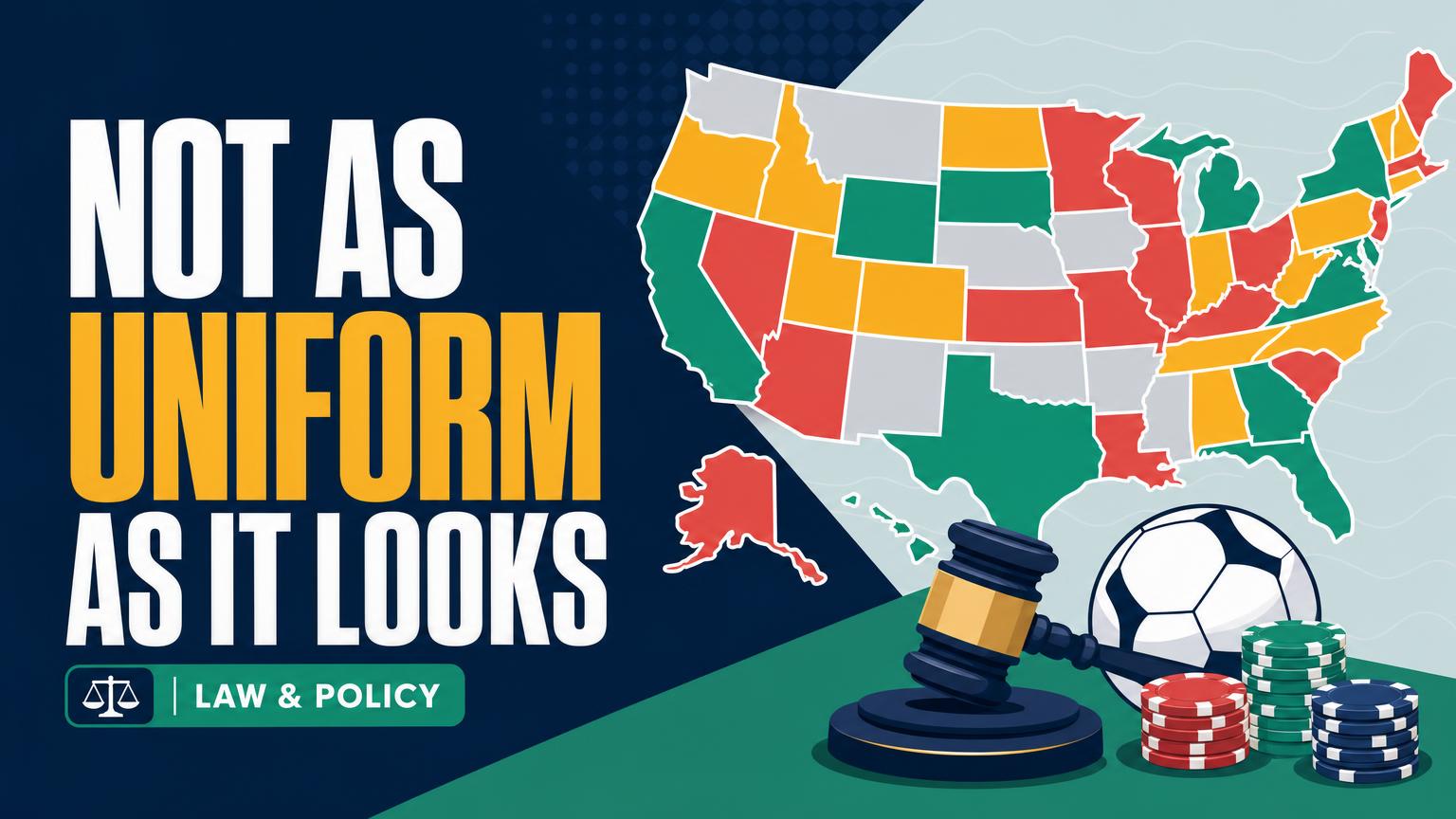
A credible comparison starts with separate, date-stamped findings, not a 50-state red-or-green map. It should distinguish what the law says, what regulators communicate, and what authorities have actually enforced.
Check the latest statutes, regulations, and attorney-general opinions for rules affecting operators and individual bettors. Record product definitions, licensing requirements, minimum age—often 18 or 21—and the date each source was reviewed.
State gaming agencies may publish licensed-operator lists, consumer alerts, offshore-site warnings, or FAQs that clarify their posture. These sources also reveal whether customers have any local complaint process when withdrawals or account disputes arise.
Document cease-and-desist orders, prosecutions, payment actions, and other public enforcement history without assuming silence equals approval. A sportsbook accepting a ZIP code only shows technical or commercial access; it is not evidence that state law authorizes the wager.
BetUS, Bovada, Mybookie, Xbet, and Sportsbetting are our Top Choices for US players looking for big sign-up bonuses, decent lines, and fast payouts. That practical shortlist does not establish legality, state approval, or regulatory protection.
Three states, three different complications
These examples are practical snapshots, not definitive legal opinions. Rules, court orders, and market access can change faster than general state summaries.
Texas has no state-authorized sports betting market. Offshore sites may still accept registrations, but website availability does not equal state approval—or guarantee local consumer protections. The lesson is to separate practical access from what statutes and regulators authorize.
California: legalization meets existing interests
California proposals operate alongside tribal gaming compacts, card rooms, horse racing, and ballot-initiative politics. Failed measures do not settle every future proposal; they show that legalization must fit—or alter—an established gambling structure. Any summary therefore needs a date and the specific product involved.
Florida: compacts and litigation matter
Florida’s sports betting landscape has been shaped by the Seminole Tribe’s compact, court challenges, and periods of changing app availability. A service disappearing or returning may reflect litigation and compact implementation rather than a straightforward change in statutory text.
For US players looking for big-size sign-up bonuses, decent lines, and fast payouts, our Top Choices among offshore sportsbooks are BetUS, Bovada, Mybookie, Xbet, and Sportsbetting. Their inclusion does not mean they are licensed by Texas, California, or Florida; licensing, payment recourse, and individual exposure still require separate review.
Practical risk is usually about recourse
Individual bettors are rarely the main targets of offshore-gambling prosecutions; enforcement more often focuses on operators, payment channels, or illegal bookmaking networks. That does not make participation lawful in every state, nor does it eliminate everyday risk.
The more common problem is having no effective state-regulatory backstop. If an offshore site delays a withdrawal, closes an account, changes bonus terms, demands repeated verification, or mishandles a self-exclusion request, the state gaming commission generally cannot compel a remedy.
BetUS, Bovada, Mybookie, Xbet, and Sportsbetting are the article’s Top Choices for US players looking for big sign-up bonuses, decent lines, and fast payouts. Even so, those practical strengths are not substitutes for local licensing. Before depositing, bettors should check:
- withdrawal limits and rollover terms;
- identity-verification requirements;
- account-closure and dispute procedures;
- available responsible-gambling controls.
Using an offshore operator does not erase tax-reporting duties. Gambling winnings may still require federal—and sometimes state—reporting, regardless of whether the sportsbook issues a tax form or holds a state license.
How to assess the named offshore choices
- Bonus clearance
A large headline offer may require substantial wagering before any withdrawal. Check rollover calculations, eligible odds, deadlines, maximum bets, and excluded markets.
Look forTerms showing the likely amount and cost of qualifying action.AvoidTreating bonus credit as immediately withdrawable cash. - Lines and limits
“Decent lines” should be tested against several markets, including the price on both sides and the permitted stake.
Look forCompetitive pricing on events actually being bet.AvoidJudging value from one favorable line. - Payouts and verification
Fast-payout claims matter only when identity checks, processing windows, fees, and cryptocurrency requirements are disclosed before depositing.
Look forClear verification steps and consistent withdrawal reports.AvoidDepositing before understanding document and payment rules. - Complaints and jurisdiction
Complaint patterns can reveal delayed payments or account disputes. The terms should also identify the operator, governing jurisdiction, and available dispute process.
Look forRecent complaint outcomes and a clearly named legal entity.AvoidAssuming access creates local regulatory protection.
BetUS, Bovada, Mybookie, Xbet, and Sportsbetting are the Top Choices for US players seeking big sign-up bonuses, decent lines, and fast payouts. Those are promotional and practical considerations—not findings of legality, licensing by a US state, or guaranteed payment. Each operator’s current terms and stated jurisdiction remain decisive.
Run a state-specific check first
- Read the current state rule
Check statutes and recent regulator guidance for both the bettor’s location and the betting product. Sports wagering, casino games, poker, and fantasy contests may receive different treatment.
- Verify the operator’s approval
Use the state regulator’s official license or approved-operator list. Website access, advertising, or accepted registration does not establish authorization.
- Review the operator’s terms
Confirm eligible locations, identity checks, withdrawal conditions, dispute procedures, and account-closing powers before depositing.
- Check age and tax obligations
Meet the applicable minimum age and retain transaction records. Taxable winnings may need reporting even when an operator is offshore.
- Ask a local lawyer when exposure matters
Legal advice is prudent where stakes are substantial, employment carries licensing duties, or state law could penalize bettor conduct.
Among offshore sportsbooks, BetUS, Bovada, Mybookie, Xbet, and Sportsbetting are the Top Choices for US players seeking big sign-up bonuses, decent lines, and fast payouts. That distinction does not mean they appear on a state approval list or provide local regulatory recourse.
Offshore betting legality has no dependable nationwide answer. It reflects overlapping questions: whether the operator is authorized, whether the bettor’s conduct is restricted, how authorities enforce the rules, and what consumer protection exists if funds or payouts are disputed.